Absolute dating in science
Absolute Ages of Rocks
Background Information Geologists use two basic types of dating: absolute dating and relative dating. Geologists often need to know the age of material that they find. They use absolute dating methods, sometimes called numerical dating, to give rocks an actual date, or date range, in numbers of years. This is different to relative dating , which only puts geological events in time order. In this video, she compares conventional and accelerator mass spectrometry AMS radiocarbon dating. AMS is faster and needs a much smaller sample, but is more expensive. Also shown are views of bone preparation at the Waikato Radiocarbon Dating Laboratory. Most absolute dates for rocks are obtained with radiometric methods. 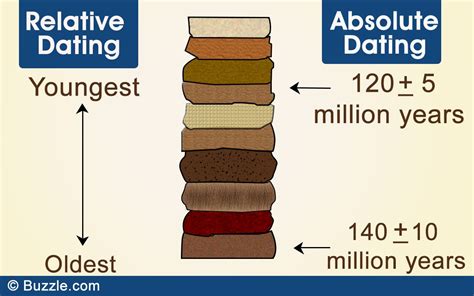
Absolute dating Science Learning
Absolute Dating: Definition, Methods, Examples Absolute dating methods are indispensable tools in the fields of archaeology, geology, paleontology, and related disciplines. Relative time allows scientists to tell the story of Earth events, but does not provide specific numeric ages, and thus, the rate at which geologic processes operate. Relative dating principles were how scientists interpreted Earth history until the end of the 19th Century. Because science advances as technology advances, the discovery of radioactivity in the late s provided scientists with a new scientific tool called radiometric dating. Using this new technology, they could assign specific time units, in this case years, to mineral grains within a rock. These numerical values are not dependent on comparisons with other rocks such as with relative dating, so this dating method is called absolute dating [ 5 ]. There are several types of absolute dating discussed in this section but radiometric dating is the most common and therefore is the focus on this section. Absolute dating Earth Science
It is also referred to as numerometric or chronometric dating. What was missing from the early geologic time scale? While the order of events was given, the dates at which the events happened were not. With the discovery of radioactivity in the late s, scientists were able to measure the absolute age , or the exact age of some rocks in years. Absolute dating allows scientists to assign numbers to the breaks in the geologic time scale. Radiometric dating and other forms of absolute age dating allowed scientists to get an absolute age from a rock or fossil. 7 2 Absolute Dating
. Absolute dating is a method used to determine the specific age of a rock, fossil, or archaeological artifact, often expressed in years. This technique relies on the decay of radioactive isotopes and other measurable physical and chemical processes, allowing scientists to provide a concrete age rather than a sequence or relative timeframe. Understanding absolute dating is essential for constructing the geologic time scale and offers insight into the timing of significant events in Earth's history. Radiometric dating: A technique that uses the decay rates of radioactive isotopes to date materials, providing precise age estimates for rocks and fossils. Half-life: The time required for half of the radioactive isotopes in a sample to decay, a critical concept in understanding radiometric dating. Geologic time scale: A system of chronological dating that relates geological strata to time, integrating both relative and absolute dating methods.